
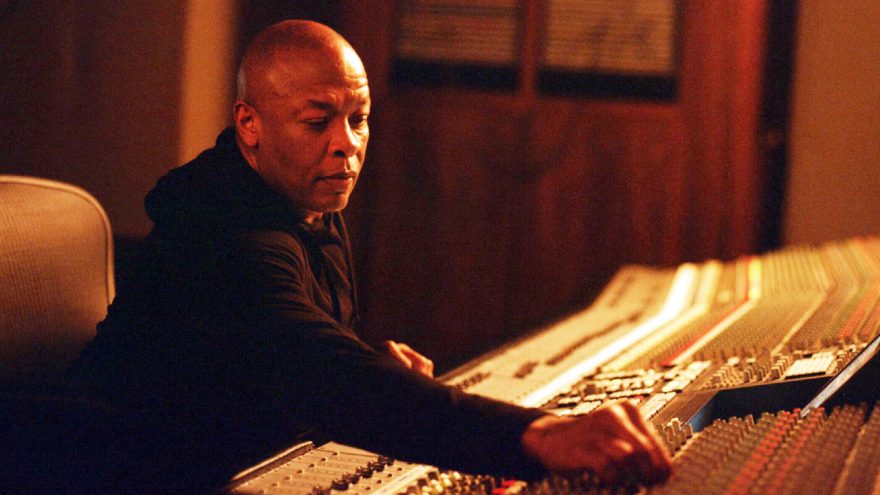
In hip hop, unfinished business often turns into legend. This week, Cam’ron added another story to that long tradition, explaining why a long‑rumoured collaboration with Dr. Dre never reached the public.
Speaking on Revolt’s podcast Talk With Flee, Cam’ron sounded more reflective than bitter. He described recording with Dre years ago, then waiting for a version that never arrived. The reason, he said, was simple and familiar.
“I would love to have a song with Dr. Dre”, Cam’ron explained. “But I never get that copy of that song we recorded… He’s a perfectionist”.
This is not an empty word when attached to Dre.
Perfection Before Release
According to Cam’ron, Dre’s standards slow everything down. However, they also explain why his catalogue remains small and monumental. Dre has released only a handful of solo albums across three decades. Yet each one reshaped hip hop’s sound.
Cam’ron pointed to others in the same position. “Imagine all the music that’s held from Ice Cube, MC Ren and Eminem”, he said. “He’s that perfectionist”.
Similarly, Kendrick Lamar used the same word to describe Dre as someone who endlessly tweaks beats, mixes, and arrangements. “He works hard, sometimes I feel like I’m slowing him down. Dre is a perfectionist. Music is a science for him”, said Kendrick in the interview with French media Clique.
The Game, 2 Chainz, and many other artists remember recording the same line for Dre over and over again, until he gets the exact sound he needs for the track. “He’s a perfectionist”, 2 Chainz said recently. “That’s why you want to be around him. He records every day whether he’s going to put out somebody or not. He’ll make like three full songs a day, with all types of instrumentation, with a whole skit involved. He likes it”.

But very little of what Dre works on sees the light of day.
For Dre, a track either meets his standard or stays locked away.
The Cost of High Standards
For artists, this approach can feel frustrating. A Dre credit carries enormous weight. Therefore, losing a finished‑sounding song hurts. Cam’ron admitted he would still love that collaboration on his résumé.
Yet the pattern is consistent. Dre’s vault reportedly holds unreleased material from many eras and artists. Some of it may never surface. And that, paradoxically, strengthens his legacy.
Because when Dre does release music, it lasts.
Quality Over Quantity
Albums like “The Chronic”, “2001”, and “Compton” did not arrive quickly. However, each one defined its moment and outlived it. Dre’s method values longevity over volume.
In that sense, Cam’ron’s story fits a larger truth. Dre’s perfectionism leaves artists waiting. At the same time, it gives hip hop records that age slowly and speak loudly.
Regret is natural. Still, restraint has its own power. Dre’s silence between releases is part of why his music still sounds essential.